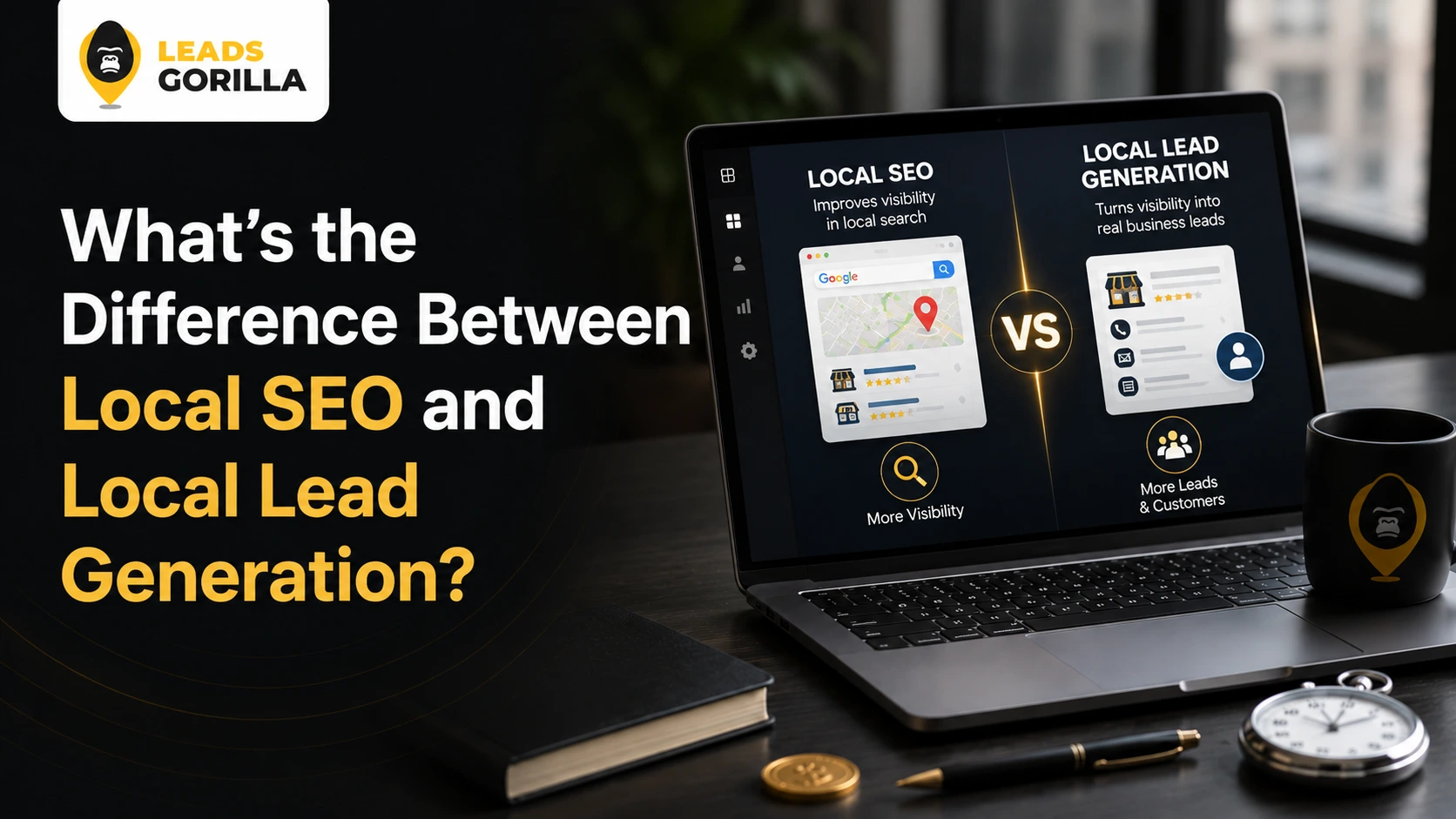
Quick Overview
Local SEO and local lead generation are both essential to growing a local business, but they are not the same strategy. Local SEO is the process of improving online visibility so nearby prospects find a business through organic search. Local lead generation is the active work of identifying, contacting, and converting those prospects into paying clients, with or without ranking first. The most effective agencies in 2026 treat these as two layers of the same system: SEO builds long-term discoverability, and lead generation fills the pipeline while that foundation takes root.
Understanding where each strategy starts, where it ends, and where they overlap is what separates agencies that close local clients consistently from those that are always starting over. This blog breaks down both strategies clearly, explains the key differences, and shows how to deploy them together for results on both short and long timelines.
Why Local SEO and Lead Generation Are Not the Same
If you have been running a marketing agency or acquiring local business clients for any length of time, you have probably used the terms local SEO and local lead generation almost interchangeably. Most people in the industry do. But they are not the same strategy; they do not target the same moment in the buyer journey, and treating them as synonyms can mean months of effort with very little to show for it.
Local SEO and local lead generation are two of those distinctions that sound obvious until you sit down to explain them. One is about being found. The other is about initiating a conversation with someone ready to buy, whether they found you first or not. Both matter. Both require different tools, different timelines, and different expectations.
This blog breaks down how local SEO and local lead generation actually differ, where they overlap, and how platforms like LeadsGorilla are changing what agencies can accomplish when they run both together.
In practice, agencies see the biggest difference when they use local SEO to build long-term visibility while using lead generation to create conversations before organic rankings mature.
What Is Local SEO?
When comparing local SEO and local lead generation, local SEO is the process of optimizing a business’s online presence so it appears when people in a specific geographic area search for relevant products or services. When someone in Dallas searches “emergency plumber near me,” the businesses appearing in the local pack got there through consistent local SEO work.
The core tactics include Google Business Profile optimization, local keyword targeting, NAP citation consistency across directories, review management, and location-specific landing pages. The U.S. Small Business Administration notes that maintaining an accurate and consistent online presence is one of the most important steps local businesses can take to attract nearby customers, which is exactly what a strong local SEO strategy delivers.
Local SEO is fundamentally an inbound strategy. You are not reaching out to anyone. You are making sure that when a nearby prospect searches for what you offer, your business shows up before the competition does.
The Timeline Problem
This is where clients and agencies often clash. Local SEO is a long-term strategy, and the timeline varies based on competition, location, website authority, and the quality of the local SEO work. Meaningful improvements can take several months, but the upside is durable local search visibility that can continue generating organic traffic and local leads once rankings are established. The downside is the gap between starting and seeing results, which is precisely why local lead generation can help agencies create opportunities sooner.
What Is Local Lead Generation?
Local lead generation is the process of identifying, attracting, and converting potential customers within a specific geographic area. Unlike local SEO, which helps prospects discover a business through local search, lead generation actively creates opportunities through outreach, paid campaigns, lead magnets, prospecting, or other acquisition methods.
For a marketing agency, this might mean using an AI-powered platform to identify local businesses with weak digital presences, running geo-targeted ads, offering free audit reports, or sending personalized outreach based on verified marketing gaps. The defining characteristic is the focus on generating qualified local leads and conversion opportunities, rather than visibility alone.
Why Local Leads Convert Faster
Local leads typically carry proximity-based intent. A restaurant owner who just received a personalized audit showing their GMB listing is incomplete, and they are losing search visibility to a competitor two blocks away, has an obvious, urgent problem. That context makes conversion significantly faster than a broad awareness campaign ever could.
For agencies managing multiple client accounts, this specificity is where the real competitive edge lives. Generic outreach gets ignored. Evidence-based outreach to the right local prospect, at the right moment, gets a reply.
Local SEO and Local Lead Generation: The Key Differences
| Local SEO | Local Lead Generation | |
| Primary Goal | Organic visibility in local search | Active acquisition of qualified contacts |
| Timeline | Several months, depending on competition and market | Days to weeks with the right tools |
| Traffic Source | Google Search and Maps, organic | Outreach, paid ads, AI prospecting |
| Cost Model | Ongoing investment that compounds | Per campaign or per lead |
| Prospect State | Already searching for a solution | May not be actively searching yet |
| Best For | Long-term authority and organic traffic | Immediate pipeline and client acquisition |
The core distinction between local SEO and local lead generation is timing and intent. Local SEO captures demand that already exists. Local lead generation creates, or intercepts demand at a different point in the buyer journey, often before a competitor does.
Where They Overlap (and Why Both Matter)
The strongest local marketing strategies treat these as complementary layers, not competing channels.
SEO Creates Passive Lead Flow
When a business ranks in the top positions of the Google Map Pack for high-intent keywords, it generates inbound leads organically without any active outreach. A plumbing company ranking for “emergency plumber Chicago” is generating local leads through SEO, even though the mechanism is entirely organic. This is why agencies that deliver local SEO services should always frame results in terms of leads and revenue rather than rankings alone.
Lead Generation Supports SEO Opportunities
Active lead generation can also support the broader marketing system around local SEO. Outreach can uncover businesses with specific Google Business Profile, citation, review, or local visibility gaps, giving agencies clear opportunities to address through SEO services. The two strategies work best together when lead generation creates immediate conversations while local SEO builds long-term search visibility.
If you want to go deeper on converting the prospects your lead generation surfaces, this breakdown of turning cold leads into clients walks through the follow-up framework that works across both channels.
Local Lead Generation Techniques That Work Right Now
AI-Powered Prospecting
This is the tactic that has changed the most in the past two years. Platforms like LeadsGorilla scan Google and Facebook to identify local businesses with specific marketing gaps, incomplete GBP listings, missing citations, low review counts, or poor local keyword visibility, and surface them as pre-qualified prospects in seconds. What used to take hours of manual research per prospect can now be done across entire cities and categories in minutes.
The quality improvement here is significant. An outreach message that references a business’s exact GBP score or specific citation gaps is not a cold pitch. It is an evidence-based observation, and that distinction can make outreach more relevant and increase the chances of a response.
Rank and Rent
This model involves building and ranking a niche site targeting local service keywords, then renting the leads or the site itself to a local business in exchange for a monthly fee. As described in the Wikipedia overview of lead generation, the shift from traditional outbound prospecting toward digital, intent-based approaches has fundamentally changed how businesses identify and convert clients. The agency owns the asset, and the business pays for access to the leads it generates.
Geo-Targeted Paid Campaigns
Google Local Services Ads and Meta lead ads with tight radius targeting produce immediate lead volume without waiting for organic rankings. These work best when paired with a structured follow-up process. Agencies that pair paid lead generation with a consistent outreach cadence tend to see significantly better close rates than those running ads alone.
Free Audit Reports as Lead Magnets
Offering a free local SEO or GBP audit gives the prospect something immediately useful and gives the agency a qualified contact who has already signaled interest. Platforms that automate this at scale make the tactic viable across dozens of markets simultaneously, which changes what a two-person agency can realistically offer.
Which Strategy Should You Prioritize?
Choosing between local SEO and local lead generation depends largely on your timeline, acquisition goals, and available resources.
Prioritize local SEO if you have three to six months before results need to appear, you are building compounding authority for a long-term client relationship, or you want a sustainable traffic source that reduces acquisition costs over time.
Prioritize local lead generation if you need to close new clients in the next thirty days, you are entering a new market and want fast data on the best prospects, or you want to test a niche before committing to a full SEO build.
Use both if you are running an agency and need predictable pipeline growth while simultaneously building long-term value for retained clients, which describes most serious agency growth plans.
Common Mistakes That Cost Agencies Results
Treating rankings as the final goal is one of the most common mistakes in local SEO work. Rankings are an input. Calls, form fills, and booked appointments are the output, and optimizing for one without the other leaves significant revenue on the table.
Running lead generation without a follow-up system is equally costly. A list of local prospects with one cold email sent is not lead generation; it is a list. Many agencies also lose results to avoidable mistakes in targeting and outreach sequencing, which is covered in detail in the common lead generation mistakes breakdown on the LeadsGorilla blog.
Finally, ignoring local branding consistency hurts both strategies. Consistent NAP information, relevant local content, and geographic signals can help reinforce a business’s local relevance and credibility across the web. Agencies that build this consistency as part of a lead gen campaign are simultaneously strengthening local SEO authority, even when that is not the primary campaign goal.
How LeadsGorilla Brings Both Together
LeadsGorilla was built for agencies and freelancers who need to run both local SEO and local lead generation without a full team behind them. The platform scans Google and Facebook for local businesses with weak or incomplete digital presences, generates branded audit reports that make outreach immediately credible, and includes AI-drafted email copy so the first message to a prospect is specific rather than generic.
The same audit data that makes outreach credible also becomes the service proposal. A prospect’s GBP gaps, missing citation consistency, and low review count are not just reasons to reach out. They are the roadmap for what the agency will deliver.
Over 28,000 marketers globally use LeadsGorilla to run this combined approach, closing local clients without cold calling, without a research team, and without months of groundwork before a single lead enters the pipeline. Start with a free trial and see what prospects are available in your target market at LeadsGorilla.
Conclusion
Local SEO and local lead generation are not rivals. They are different phases of the same growth system. SEO builds the foundation that makes a business findable over time. Lead generation fills the pipeline while that foundation is being built, or surfaces opportunities that search alone would never reach.
The agencies consistently winning local markets run both. They are not choosing between visibility and conversion. They are building systems where each strategy feeds the other, using AI-powered tools to handle the prospecting and outreach that used to require a full team.
Start with the strategy your current timeline demands, and build toward the combined approach as your capacity allows. When you are ready to see which local prospects are worth reaching today, LeadsGorilla finds them in under sixty seconds.
Frequently Asked Questions
What is the main difference between local SEO and local lead generation?
Local SEO focuses on improving a business’s visibility in location-based organic search results. Local lead generation is the active process of identifying and converting nearby prospects into clients. SEO is about being found; lead generation is about initiating and closing the conversation.
Can local SEO generate leads on its own?
Yes. Once local SEO rankings are established, they function as a passive lead generation engine. A business ranking in the top three Google Map Pack positions for high-intent local keywords will receive calls, form fills, and direction requests without any additional outreach. The challenge is that achieving those rankings takes several months of consistent work.
How long does local lead generation take to produce results?
Properly executed local lead generation, especially when supported by AI prospecting tools and personalized outreach, can produce qualified conversations within days or weeks. Paid geo-targeted campaigns can deliver immediate traffic and form fills from the day they launch.
Is local SEO or lead generation better for a new agency?
For a new agency that needs clients quickly, local lead generation produces faster results. Local SEO is a longer investment that compounds over time. Most experienced agency operators recommend running lead generation for immediate pipeline while building local SEO authority in parallel.
What tools are used for local lead generation?
Common tools include AI-powered prospecting platforms like LeadsGorilla, Google Local Services Ads, Meta lead ad campaigns with radius targeting, citation management software, and outreach automation platforms. The most effective setups combine prospecting, audit reporting, and personalized outreach in a single workflow.
How does local SEO support lead generation campaigns?
Strong local SEO improves credibility with prospects discovered through outreach. Reviews, GBP activity, and local citation consistency also provide data points that make outreach more specific and relevant. A business that already ranks well is also easier to upsell on additional SEO services after the initial engagement.
What is rank and rent in local lead generation?
Rank and rent is a local lead generation model where an agency builds and ranks a niche website targeting local service keywords, then rents access to those leads or the website itself to a local business in exchange for a monthly fee or per-lead payment. The agency owns the asset; the client receives the leads.
How important are Google reviews for local lead generation?
Reviews are critical for both local SEO rankings and lead generation conversion rates. A high review count with strong average ratings improves visibility in the local pack and converts a higher percentage of searchers who find the profile organically. For outreach-based lead generation, low review counts are among the most common qualifying signals used to identify businesses that need agency help.
What is the role of a Google Business Profile in local SEO and lead generation?
The Google Business Profile is the centerpiece of local SEO and the most visible asset a local business has in search results. An optimized, active GBP improves local pack rankings, drives direct calls and direction requests, and serves as a credibility signal for prospects reached through any channel. Incomplete or unoptimized profiles are one of the most common signals used by lead generation agencies to identify qualified outreach targets.
How does AI change local lead generation for agencies?
AI-powered platforms can scan thousands of local businesses in seconds to identify specific marketing gaps, generate personalized audit reports, and draft outreach messages relevant to each prospect’s actual situation. This removes the research and personalization bottleneck that makes manual local lead generation too slow to scale across multiple markets or client segments.