Getting a steady flow of clients is one of the biggest challenges for marketing agencies. You may have a skilled team, a strong portfolio, and services that deliver value, but without a reliable way to attract and convert prospects, growth can become unpredictable.
Effective lead generation for marketing agencies is not about sending more emails or posting on every platform. It means reaching businesses that fit your services, identifying where they need support, and giving them a clear reason to start a conversation.
In 2026, agencies can combine AI-assisted research, personalised outreach, useful content, and consistent follow-up to build a more organised sales pipeline. Here are 10 practical strategies to help your agency attract potential clients and build a more reliable sales pipeline.
Why Lead Generation Matters for Marketing Agencies
Marketing agencies need a reliable process for finding potential clients, starting conversations, and moving suitable prospects towards a sales meeting. Relying on referrals alone can make the pipeline difficult to predict, while using only outbound outreach may require significant time and research.
A balanced approach gives agencies more ways to connect with potential clients. It also helps them understand which channels attract suitable prospects and which parts of their sales process need improvement.
The aim is not simply to increase the number of contacts. It is to generate relevant opportunities that match your agency’s services, capacity, and target market.
1. Use AI to Find Businesses With Marketing Gaps
Finding prospects manually through search results, business directories, and social platforms can take considerable time. AI-assisted lead generation tools can help agencies research businesses, organise prospect information and identify potential marketing gaps for further review.
For example, an agency targeting local home service businesses could review their Google Business Profiles, website content, customer reviews and service information. The team might notice missing service pages or incomplete business details that could be worth discussing with the business owner.
These observations should be checked before they are used in outreach. Data accuracy, targeting, and human review all affect how useful AI-assisted prospecting can be.
This is the type of workflow covered in how to find local leads using an AI lead generation tool in under a minute.
How to Apply This Strategy
- Define the industries and locations your agency serves.
- Use a prospecting tool to identify businesses that fit those criteria.
- Review the available business and website information.
- Verify any potential marketing gaps.
- Prioritise businesses that could genuinely benefit from your services.
This process helps your team prioritise businesses that are a better fit for your services.
2. Offer a Personalised Marketing Audit
A generic sales pitch gives a prospect little reason to respond. A personalised audit can make the conversation more useful by showing that your agency has taken time to understand the business.
An audit does not need to be a lengthy report. It can highlight a few relevant observations about a prospect’s online presence and explain why they may matter.
What to Include in a Useful Audit
Depending on the business and your agency’s services, you could review:
- Website experience: Check whether important information is easy to find and whether key pages work as expected.
- Local search presence: Review business information, service details, and location relevance.
- Content opportunities: Identify useful topics or service pages that may be missing.
- Customer feedback: Look at review patterns and how the business responds to customers.
- Next steps: Recommend practical actions based on the issues you have verified.
Avoid presenting assumptions as confirmed problems. Explain what you observed, why it may matter, and what the business could consider doing next.
A well-prepared audit starts a conversation around the prospect’s needs rather than immediately pushing your services.
3. Build an Organic Lead Generation Channel
Paid advertising can help agencies reach potential clients, but depending on one channel can make lead generation vulnerable to changes in costs, performance, or platform rules.
Organic channels can support a more balanced approach. These may include search-optimised website content, local SEO, useful social media posts, industry communities, and referral relationships.
For agencies serving local businesses, creating helpful content around local visibility and customer acquisition can demonstrate relevant knowledge. The same principles are discussed in 12 proven local strategies for generating leads without paid ads.
Start With a Focused Content Plan
Rather than publishing on every topic, create content around the problems your ideal clients want to solve. For example, an agency serving home service businesses could publish guidance on local search visibility, website enquiries, or customer reviews.
Each piece should answer a real question and connect naturally to a relevant service page or next step.
Organic channels generally require consistent effort. They should be viewed as part of a longer-term lead generation plan, rather than a guaranteed source of immediate enquiries.
4. Publish Content That Demonstrates Your Expertise
Saying that your agency is experienced is not the same as showing what it can do. Prospective clients need useful information that helps them understand your approach and the value of your services.
Content can demonstrate expertise through:
- Case studies based on genuine client work
- Practical explanations of marketing processes
- Campaign lessons and documented results
- Answers to common questions from your target audience
- Examples of how your agency approaches a specific business challenge
When sharing results, provide enough context for readers to understand what was measured and over what period. Do not present one client’s outcome as a typical result for every business.
Useful, specific content can also give your sales team something relevant to share during prospect conversations.
5. Use LinkedIn for Targeted Prospecting
LinkedIn can help agencies connect with business owners, marketing managers, and other decision-makers. However, simply publishing promotional posts may not create meaningful conversations. Use the platform to understand your ideal clients, participate in relevant discussions, and share insights connected to the services you provide.
For example, an agency specialising in marketing for ecommerce businesses could engage with discussions about product pages, customer acquisition, or campaign measurement. Its posts should reflect the questions and challenges of that audience.
How to Identify Suitable Agency Prospects
Before contacting someone, consider whether they are a relevant fit for your agency.
- Business fit: Does the company operate in an industry your agency understands?
- Marketing opportunity: Is there a verified issue your services could address?
- Service relevance: Does your agency offer a suitable solution?
- Growth potential: Is there a clear business reason to improve its marketing?
- Contact relevance: Are you reaching someone involved in the decision?
This qualification process helps your team spend more time on suitable opportunities and less time on contacts that are unlikely to become clients.
6. Create a Consistent Lead Follow-Up Process
A prospect may not be ready to discuss your services after the first interaction. Without a follow-up process, useful conversations can be forgotten or left unfinished.
A CRM or simple lead tracker can help your team record conversations, monitor prospect status, and schedule the next action. The system does not need to be complicated, but it should be used consistently.
What to Track
Record key stages of your sales process, such as:
- Prospects contacted
- Replies received
- Qualified conversations
- Meetings booked
- Proposals sent
- New clients acquired
These figures help you understand where prospects are dropping out. For example, if your agency contacts many businesses but receives few relevant replies, the issue may be targeting or messaging rather than the number of prospects.
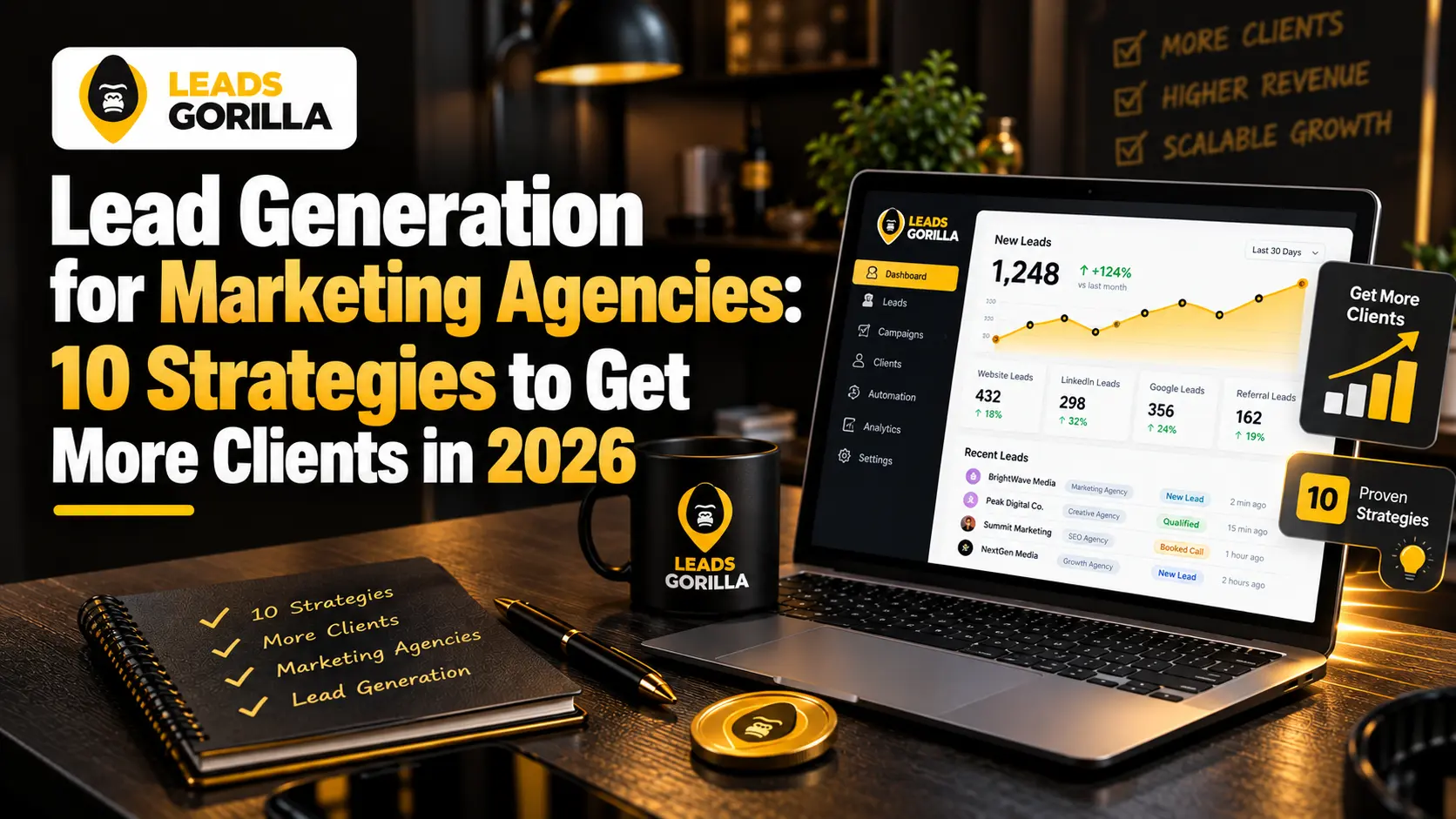
A lead dashboard, such as the one offered by LeadsGorilla, can help agencies keep prospect information organised instead of managing it across scattered notes and inboxes.
7. Re-Engage Prospects Who Were Not Ready to Buy
Not every prospect will be ready to work with your agency when you first contact them. Some may have other priorities, need internal approval, or want to revisit the decision later.
Instead of treating every non-response as a permanent rejection, use a thoughtful re-engagement process. Share a relevant resource, follow up on an earlier conversation, or check whether their priorities have changed.
The message should offer a reason to reconnect. Repeatedly sending the same sales pitch is unlikely to make the conversation more useful.
For a structured approach, see this step-by-step framework for turning cold leads into paying clients.
8. Build a Referral Process With Existing Clients
Satisfied clients may be willing to introduce your agency to other businesses, but a referral process works better when the request is clear and easy to act on.
Rather than asking clients to “send anyone your way”, explain the type of business you are looking to help. You could also provide a short introduction message they can forward if someone in their network needs your services.
Where appropriate, consider ways to recognise referrals, such as a thank-you gift or another arrangement that fits your business and client relationship.
Always make sure any referral incentive is transparent and appropriate for the relationship.
9. Use Short-Form Video to Explain Your Work
Short-form video gives agencies another way to demonstrate their process and communicate their expertise. A simple screen recording with a clear voiceover can explain an audit finding, walk through a website issue, or show how a marketing task is approached.
The video does not need elaborate production. Its value comes from being relevant, easy to understand, and specific to the audience.
For personalised prospecting, make sure the video refers to information you have checked. Avoid making public claims about a business’s performance without reliable evidence or permission where needed.
You can also publish general educational videos that answer common questions from your target market.
10. Fix Common Lead Generation Problems Before Adding More Channels
When lead generation is inconsistent, adding another platform is not always the answer. Sometimes the existing process needs attention.
Common issues include:
- Contacting businesses outside your target market
- Using unverified or outdated contact information
- Sending the same message to every prospect
- Failing to explain the value of the proposed service
- Not recording follow-up actions
- Measuring contact volume without reviewing lead quality
Start by identifying where your current process is losing suitable prospects. Improve one issue, monitor the results, and then decide whether another channel is needed.
You can explore these problems further in common lead generation mistakes that cost agencies and clients.
How to Choose the Right Lead Generation Strategy for Your Agency
You do not need to implement all 10 strategies at once. The right starting point depends on your agency’s size, target market, services, and available resources.
| Agency Situation | Recommended Starting Strategy |
| New agency building its first client base | Use AI-assisted prospect research to identify suitable businesses, then reach out with personalised messages. |
| Small agency with limited time and resources | Focus on a simple lead tracker, regular follow-ups, and a clearly defined target market. |
| Agency with a strong portfolio or proven results | Share relevant case studies and offer personalised audits to demonstrate expertise. |
| Agency serving a specific industry or niche. | Use targeted LinkedIn engagement and industry-specific content to connect with decision-makers. |
| Agency with an established client base | Build a structured referral process and ask satisfied clients for relevant introductions. |
| Agency looking for long-term inbound leads | Invest in SEO-focused content, useful resources, and organic visibility. |
Review your results regularly. Track how many prospects become qualified conversations and clients, not just how many contacts your team collects.
Tools such as LeadsGorilla can support the prospect research and organisation process, while your team remains responsible for checking the information, choosing suitable prospects and building genuine business relationships.
Final Thoughts
Consistent lead generation for marketing agencies comes from having a clear target market, a useful reason to contact prospects and a process for following up. AI-assisted research, personalised audits, organic content, LinkedIn engagement and referrals can all play a role, depending on your agency’s needs.
Start with the strategies that fit your current capacity. Track the quality of the conversations they create, review what is working, and improve your process over time. A focused approach can help your agency build a more organised pipeline and spend more time speaking with businesses that are a genuine fit.
If you want to organise prospect research and identify potential local business opportunities, explore LeadsGorilla.
FAQs
1. What is lead generation for marketing agencies?
Lead generation for marketing agencies is the process of finding and attracting businesses that may need an agency’s services. It can include prospect research, content marketing, referrals, social media, and personalised outreach.
2. How can a marketing agency get more clients?
An agency can attract more potential clients by defining its target market, identifying relevant business needs, sharing useful expertise, and following up consistently. The right mix depends on its services and available resources.
3. Does AI help with marketing agency lead generation?
AI tools can assist with prospect research, organising information, and identifying potential opportunities. Agencies should verify the information before using it to qualify prospects or personalise outreach.
4. Is SEO useful for generating leads for a marketing agency?
SEO can help an agency reach people searching for relevant services and information. It usually requires ongoing work, so agencies may combine it with outreach and referrals while building organic visibility.
5. What should a marketing agency include in a prospect audit?
A prospect audit can include relevant observations about a business’s website, local search presence, content, and customer feedback. It should explain verified findings and offer practical next steps.
6. How should agencies measure lead generation?
Agencies can track replies, qualified conversations, meetings, proposals, and new clients. Reviewing these stages helps identify whether the main issue is targeting, messaging, follow-up, or conversion.
7. Can referrals help agencies find new clients?
Yes. Existing clients and professional contacts may introduce an agency to businesses that need its services. A clear referral request makes it easier for people to understand which introductions would be useful.
8. How often should an agency follow up with a prospect?
There is no single follow-up schedule that suits every prospect. Agencies should consider the previous conversation, the prospect’s preferences, and the relevance of the next message, while avoiding excessive or unwanted contact.