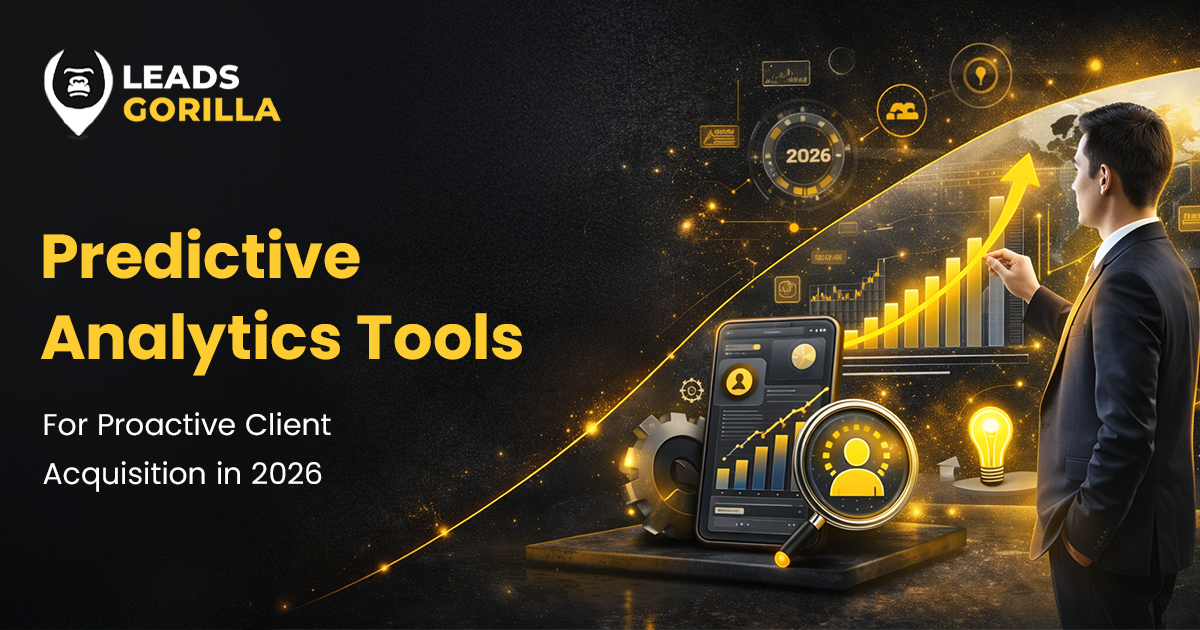
In 2026, winning clients consistently requires more than traditional outreach. Agencies that leverage predictive analytics gain a measurable edge by anticipating client behavior, prioritizing high-value prospects, and automating data-driven strategies. Predictive analytics tools help agencies not only identify the right leads but also understand their intent, optimizing the timing and relevance of every interaction.
With AI-powered forecasting and analytics, agencies can move from reactive campaigns to analytics-driven acquisition, making every touchpoint count. These methods complement other strategies like LLM optimization seo, where AI models generate insights that guide content and lead scoring, creating a seamless integration between predictive data and search visibility.
Key Takeaways
- Predictive analytics leads improve conversion rates by prioritizing high-intent prospects
- Forecast-based client targeting ensures marketing resources focus on the most promising opportunities
- AI predictive lead scoring reduces manual guesswork while increasing outreach efficiency
- Integration with AI content strategies amplifies overall ROI and pipeline visibility
Why Predictive Analytics Is Essential for Modern Agencies
Modern agencies are shifting from reactive to proactive client acquisition. Predictive analytics allows teams to:
- Identify prospects showing early buying signals
- Forecast revenue potential per account
- Align outreach with intent and engagement data
- Reduce wasted effort on low-value leads
By combining predictive scoring with analytics-driven acquisition, agencies can systematically prioritize clients, creating a predictable pipeline while reducing churn and missed opportunities.
Core Features of Predictive Analytics Tools
The most impactful predictive tools provide:
- AI predictive lead scoring: Assigns a value to prospects based on engagement patterns, historical conversion data, and intent signals.
- Forecast-based client targeting: Pinpoints accounts likely to convert within a specific timeframe.
- Behavioral segmentation: Organizes leads into actionable cohorts for personalized campaigns.
- Real-time insights: Monitors trends and anomalies that can affect pipeline health.
Platforms that include AI lead generation tools streamline these processes, allowing agencies to move from data collection to actionable strategy without juggling multiple systems.
How Predictive Analytics Complements LLM-Optimized Strategies
AI models like large language models (LLMs) can analyze content and engagement signals to generate scoring models for clients. When combined with predictive analytics:
- You can forecast which leads respond best to content or outreach
- Structured data for LLMs ensures that AI systems can interpret content and generate actionable insights
- Semantic content depth helps map the right offer to the right lead
This synergy ensures agencies are not only capturing leads but doing so with the precision and foresight that sets high-performing agencies apart.
Building Proactive Campaigns with Predictive Insights
Step-by-step, agencies can use predictive analytics leads to drive results:
- Collect historical engagement data: Track lead behavior across emails, forms, and content.
- Score leads dynamically: Use AI predictive lead scoring to prioritize outreach.
- Forecast account potential: Apply forecast-based client targeting to allocate resources efficiently.
- Automate outreach intelligently: Tools like LeadGorilla handle bulk outreach while maintaining personalization.
- Measure and refine: Continuously evaluate campaign performance to optimize conversion.
This approach ensures analytics-driven acquisition becomes an ongoing system rather than a one-off campaign.
Practical Benefits for Agencies in 2026
Agencies using predictive analytics experience:
- Higher conversion rates: Focused targeting reduces wasted touches
- Efficient resource allocation: Time and money go to leads most likely to convert
- Enhanced client trust: Data-driven decisions demonstrate professionalism and expertise
- Synergy with AI tools: When paired with AI lead generation tools, discovery and prospecting are faster and more accurate
Final Thoughts
2026 is the year agencies move from reactive to predictive analytics leads-driven growth. By combining AI predictive lead scoring, forecast-based client targeting, and analytics-driven acquisition, agencies can acquire clients proactively, allocate resources efficiently, and scale sustainably. When predictive insights are paired with LLM optimization SEO and AI lead generation tools, your agency transforms data into actionable, revenue-focused strategies.
FAQ Section
-
What are predictive analytics leads in agency acquisition?
It refers to using AI-driven data models to forecast which leads are most likely to convert, allowing agencies to focus resources efficiently and increase ROI.
-
How do AI predictive lead scoring systems work?
They analyze historical engagement, intent signals, and account behavior to assign a score, prioritizing prospects for outreach.
-
What is forecast-based client targeting?
A strategy that identifies high-potential accounts expected to convert within a set timeframe, enabling proactive, targeted campaigns.
-
How does predictive analytics integrate with LLM optimization SEO?
Predictive insights inform content placement, outreach timing, and scoring models. LLMs analyze patterns to improve search visibility while predictive analytics targets high-value leads.
-
Which tools are recommended for predictive analytics in agencies?
Platforms that combine scoring, targeting, and automation—like Lead Gorilla—allow seamless data-driven prospecting and campaign execution.
-
How do agencies measure the success of predictive analytics leads?
Key metrics include conversion rate, pipeline velocity, account engagement, and ROI per predictive cohort.
-
Can predictive analytics improve overall lead generation efficiency?
Yes. By combining AI scoring, behavior tracking, and automated outreach, agencies reduce wasted effort while increasing conversion probabilities.